How to Buy a Car in Ukraine Without Regrets: A Practical Buyer's Guide 2026
The used car market in Ukraine is alive and complicated — prices are rising, good cars sell within a week, and the chance of ending up with a "post-accident repair" is still very real
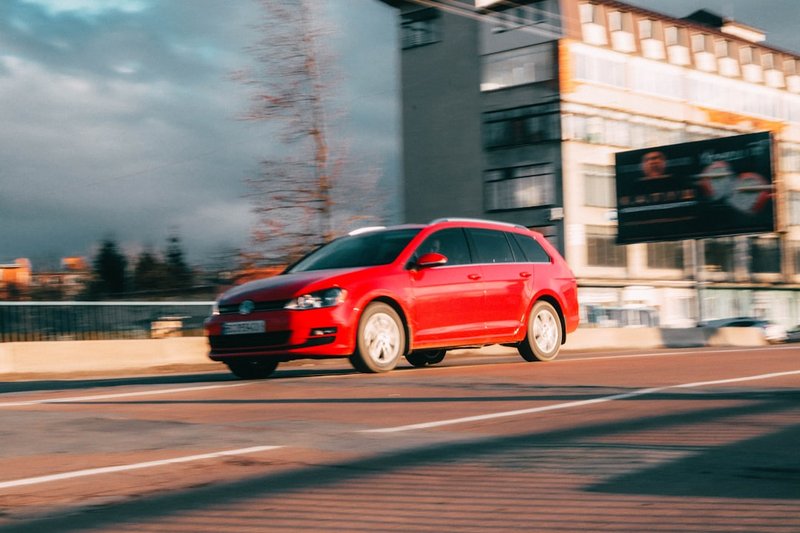
:format(webp)/https://cms.avtodata.net/media/images/053d9c83db6d473a9aa19aabb099deb7.width-800.jpg)
Published 25.05.2026, avtoprod.ua
As of May 2026, the average price of a decent used car in Ukraine ranges from $5,200 for an Opel Astra or Renault Megane to $7,800–$9,000 for a Skoda Octavia or VW Golf in reasonable condition. That's not "cheap," but there's no need to panic: options exist if you know where to look and what to ask.
Where to Search: Not Just One Platform
Most buyers visit a single marketplace and think they're seeing the whole market. That's a mistake. A great deal in Kharkiv or Dnipro might appear on avtoprod.ua while you spend hours scrolling through another site. Searching across multiple platforms simultaneously isn't a waste of time — it's the difference between overpaying $500 and making a fair deal.
Another underrated channel is regional Telegram and Facebook groups. People sell there "among their own," prices are often lower, and the seller is a real person you can verify through mutual acquaintances. The downside: there are plenty of scammers there too, so standard verification rules should never be skipped.
Budget: Do the Math Right from Day One
The psychological trap works like this: a person finds a car for $6,500, and in their mind that's already the "final number." In reality, you need to add:
- Re-registration and CBD service fees — from 3,000 to 6,000 UAH depending on the region and vehicle type
- Diagnostic inspection at a service center — from 800 to 2,500 UAH depending on the depth of the check
- VIN check and legal clearance verification — 300–700 UAH through official services
- First service after purchase — budget at least $150–300, even if "everything seems fine"
If the car has a foreign license plate (euro plates), the calculation is entirely different. Customs clearance in 2026 depends on engine displacement, year of manufacture, and the euro exchange rate — on average that's an additional $1,500–4,000 on top. Always confirm the current calculation at the time of the transaction, as rates change.
Vehicle Inspection: What You Cannot Skip
The seller says "the car has never been in an accident, never repainted, one female owner, Kyiv"? Okay, let's verify that.
Body and paint coating (LKP). A paint thickness gauge is a must. Normal factory values: 80–180 microns depending on the panel. A repainted fender easily reads 250+. Asking to borrow the device from the seller is naive — buy your own or bring a friend who has one.
VIN check. Through MVS (Ministry of Internal Affairs registry), NAIS, or paid services — check for liens, loans, encumbrances, and theft records. It takes 15 minutes and costs next to nothing, yet people still buy cars that are pledged to banks and then wonder what happened.
Lift inspection at a service center. The most important step, which half of buyers skip "because the car looks good." Looking good and being good are two different things. Ask for an inspection at an independent service center, not the seller's own mechanic. The difference can cost you $800 in wheel alignment or suspension repairs.
Negotiating: Where the Real Money Is
The Ukrainian market has haggling built in as a given. The seller lists the price with a 5–15% buffer. If a car has been sitting for more than a month — that's leverage. If there are real defects (a scratch, worn brakes, an overdue service) — name a specific amount with justification, rather than just saying "knock something off."
The psychology here is simple: specifics beat vague requests. "The front brake pads are worn down to 2 mm, replacement with labor comes to 2,800 UAH — I'm asking for a 3,000 reduction" — that's negotiation. "Could you maybe come down a little?" — that's asking for a favor.

Documents: the minimum we don't go below
Before signing the purchase agreement, verify:
- The seller's passport and tax ID — they must match the vehicle documents
- The vehicle registration certificate (tech passport) — the VIN must match the body
- No encumbrances in the Ministry of Internal Affairs and NAIS registries
- If the car is under a loan — written consent from the bank for the sale, or full repayment prior to the transaction
A notary or an electronic contract through "Diia" — both options are legal. But if the seller refuses any official paperwork and offers "just a power of attorney" — that's a red flag, not a convenience.
Which cars are genuinely worth considering in 2026
In terms of the price-to-reliability-to-parts-availability ratio for a budget of up to $8,000, the current winners are the VW Golf and Skoda Octavia (1.4–1.6 petrol or 2.0 TDI diesel, post-2012), the Toyota Corolla, and the Renault Megane. The Toyota costs more to buy but less to maintain — a genre classic. The Megane is the opposite: affordable, but choose carefully based on suspension condition.
American auction cars are a separate topic. Copart and IAAI offer low prices, but "post-accident restoration" is a lottery if you don't know who did the work or how. Without documentation from the American repair shop and an inspection by an independent mechanic, it's better not to take the risk.
A question worth asking yourself before every deal: are you buying a car, or are you buying a problem at a discount?