How to inspect a car before buying: diagnostics, documents and VIN — without rushing or taking anyone's word for it
The seller says "one owner, never in an accident, full service history"? Time to put on your skeptic hat: here is what you absolutely must check — and where to do it in Ukraine
:format(webp)/https://cms.avtodata.net/media/images/ad13de74708f4806a91d9e2ee3c16447.width-800.jpg)
Published 16.06.2026, avtoprod.ua
The secondary car market in Ukraine as of mid-2026 is alive and hot. Demand for reliable used cars is not dropping — especially in the $8,000–$15,000 range, where the bulk of listings are concentrated. But so are the bulk of the risks. "Imported from Poland," "one owner," "all original" — these phrases in a listing are not worth the paper they are printed on. The only thing that is worth anything is your own inspection.
Here is how to do it properly.
Documents first. Before you even start the engine
Most buyers start with the bodywork and the engine. The right approach is to start with the paperwork, because even a perfect car can become a major headache if something is wrong with the documents.
- Vehicle registration certificate (technical passport). Check whether the VIN on the document matches the one stamped on the body. Physically — on the front body pillar, in the engine bay, and sometimes under the driver's footwell mat. A discrepancy of even one character is a red flag.
- Chain of ownership. Ask to see previous sale and purchase agreements or the service booklet. If a car has changed hands three times in two years, there is good reason to ask why.
- For grey-market imports — customs documents. If the car has been imported and cleared through customs, there should be a customs declaration (MD-2) and a certificate of excise duty payment. Without these, there are legal risks when reselling the car.
Separately — verification through MIA service centres. This is not only for imported vehicles: if there are any suspicions about a car's origin, even one purchased on the domestic market can be submitted for expert examination. Specialists from the MIA Expert Service cross-check the body number, engine number and documents. Such an examination takes time, but its conclusion is a legal document that can protect you in court.
Online VIN check: quick and essential
The VIN is a 17-character code that serves as a car's "passport". Check it before meeting the seller: ask them to send a photo of the registration certificate and verify it through online services.
What a VIN check provides:
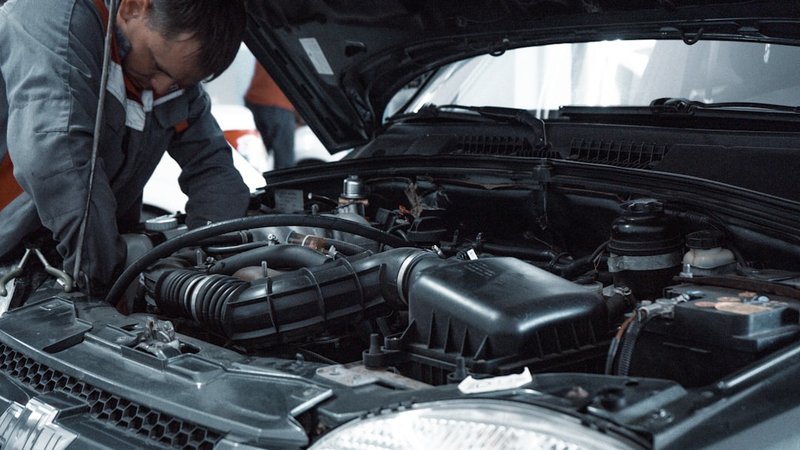
- Accident and insurance claim history (especially useful for cars from the USA or Canada — via Carfax or AutoCheck)
- Actual mileage based on service records
- Information about manufacturer recalls for the model
- Stolen vehicle check — through Ukraine's MIA registries or Interpol
- Customs clearance data, if the car was imported
For cars from Europe, autocheck.eu and vehiclehistory.com work well. For American cars — Carfax. Ukrainian registries — hsc.gov.ua (Main Service Centre of the MIA). Some services are paid (200–600 UAH per report), but that is a minor expense compared to the cost of the car.
In 2026, telematics data was added to classic registries — some manufacturers store mileage information, system errors, and even accident records in the cloud. For relatively recent vehicles (from 2019 onward), it is worth asking the dealer or checking through the brand's official service portal.
Technical diagnostics: not 'take a look', but plug in
A visual inspection is necessary, but not sufficient. An experienced fraudster with a spray can and foam rubber instead of a seal can make a 'parts car' built from wrecked components look indistinguishable from the outside. That's why you need a service station.
Where to get diagnostics done in Ukraine? Not at the seller's 'buddy mechanic', and not at some guy's garage. The best option is an independent service station — preferably an authorized dealer or a brand-specialized service center. In Kyiv, Kharkiv, Odesa, Lviv, Dnipro — every city has chain service centers that perform comprehensive diagnostics for 800–1,500 UAH. This is not a luxury; it's insurance.
What a full diagnostic check covers:
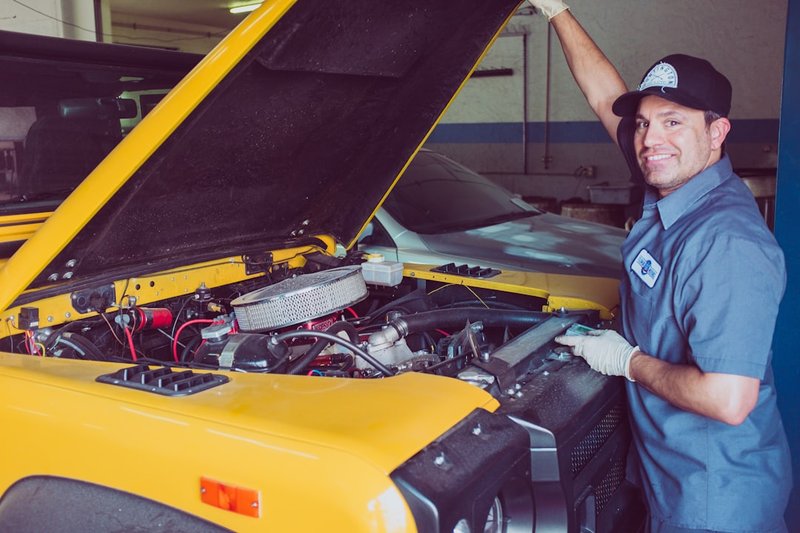
- Computer diagnostics (OBD-II). Reading fault codes from all ECU modules: engine, transmission, ABS, airbags. If the airbags were deployed — this is recorded in the module's memory, even if the fault codes were subsequently cleared.
- Body and geometry. A paint thickness gauge detects filled or resprayed panels. A deviation of 50–100 microns is normal for factory paint. More than 300 microns on a door panel indicates repair or repainting following an impact.
- Suspension and brakes. On a lift, manually: play in joints, signs of corrosion, condition of ball joints and bushings, brake disc thickness.
- Engine and transmission. Oil level and color, signs of leaks, condition of hoses, idle behavior. For an automatic — additionally: temperature under load, hesitation or jerking during gear changes.
If the seller refuses to go to a service station — walk away. No exceptions. A normal person selling a normal car has nothing to fear from an inspection.
Small things people often overlook — and later regret
Check the VIN not only in the documents. It must be identical in at least three locations: on the plate on the dashboard (visible through the windshield), on the body pillar near the driver's door, and in the engine bay. Any discrepancy or signs of tampering (blurry font, drill marks, extra stickers nearby) is grounds to walk away.
Check the MTPL insurance policy — whether it is valid and in whose name it is issued. If it is registered to another person — clarify whether there are any encumbrances or court proceedings related to the vehicle. The Movable Property Encumbrance Registry is available online at rmo.minjust.gov.ua.
And finally: negotiate after the diagnostics, not before. The inspection results are your argument for a discount. Found a rusted wheel arch? Minus 15,000 UAH. Airbags were repaired? Subtract more. If the seller won't agree — their price is not market-based, it's wishful thinking.
Ultimately, a vehicle inspection is not a ritual of distrust toward the seller. It is the only way to avoid buying someone else's problems with your own money. And on the Ukrainian used car market in 2026, there are plenty of problems being sold — you just need to learn how to spot them.