Car inspection before purchase: what to look for, where to check, and why you need a VIN
Half of all problems with used cars come not from bad vehicles, but from buyers who rushed. Here's where to stop, what to open, and why a VIN matters more than a seller's word
:format(webp)/https://cms.avtodata.net/media/images/b73b3b04650e45d3a1d2c4d0f314ccc8.width-800.jpg)
Published 11.05.2026, avtoprod.ua
The used car market in Ukraine in 2026 is a living, yet chaotic organism. Hundreds of listings appear on avtoprod.ua every day: from fresh Euro-plate cars priced at $12,000–18,000 to trusted Japanese vehicles for $5,000 with 180,000 km on the odometer. And almost every third deal goes through without a proper inspection. The buyer sits behind the wheel for 20 minutes, glances at the trash bin in the cabin — and signs. Then drives off to a repair shop.
So you don't end up being that third person — here is a specific course of action.
First step — VIN before meeting the seller
Ask for the VIN code while still in correspondence. A straightforward seller will provide it immediately. Anyone who stalls — that's already a red flag. You can check it through several tools:
- carVertical or Autocheck — for cars from Europe or the USA: shows accidents, odometer readings across multiple countries, number of owners
- havecar.com.ua — provides basic information on registrations in Ukraine, seizures, accidents, mileage from service records
- Unified MIA Register — check for theft and notarial restrictions
Paying 200–400 UAH for a full report is not an expense, it's a filter. If the report shows a discrepancy in mileage between two points (say, 120,000 km in 2022, and then suddenly 95,000 km in 2024), the conversation with the seller has one question and one answer: goodbye.
Documents — physically, in hand
At the meeting — immediately ask for the originals. The registration document and the owner's passport. If the car is registered to a legal entity or through a power of attorney — that's a separate conversation, the risks are higher there.
Key points:
- The VIN in the registration document must match the VIN on the body — character by character, with no "similar-looking" symbols. Zero and the letter "O" are different things, "1" and "I" — likewise.
- Look at the registration year and the date of the last re-registration: if the car was re-registered a year ago — ask why.
- If the car has foreign plates (customs clearance not completed) — check the status in the customs system. As of 11.05.2026, there are thousands of cars in Ukraine where owners are still dragging their feet on clearance, and a deal on such a car can become a headache for years.
Body inspection — with eyes and hands
This is the moment where most buyers get lazy. Don't be lazy. Walk around the car along its perimeter in daylight — no underground parking lots and no evening inspections. What to look for:
- Difference in panel gaps — if the gap between the fender and door on the left is 4 mm, and on the right it's 8 mm, someone somewhere drove into something sideways.
- Difference in paint tone — clearly visible in direct sunlight. A repainted panel always looks slightly different from the factory finish.
- Paint thickness gauge — costs 500–1500 UAH, pays for itself on the first inspection. Factory paint — 80–130 microns. 200+ microns — repaint. 400+ — body filler.
Sills, wheel arches, bottom of doors — the most common spots for rust. Especially on cars from 2012–2016 that came from the salt-treated roads of Kharkiv or Dnipro.
Diagnostics at a service station — mandatory, not "if I get around to it"
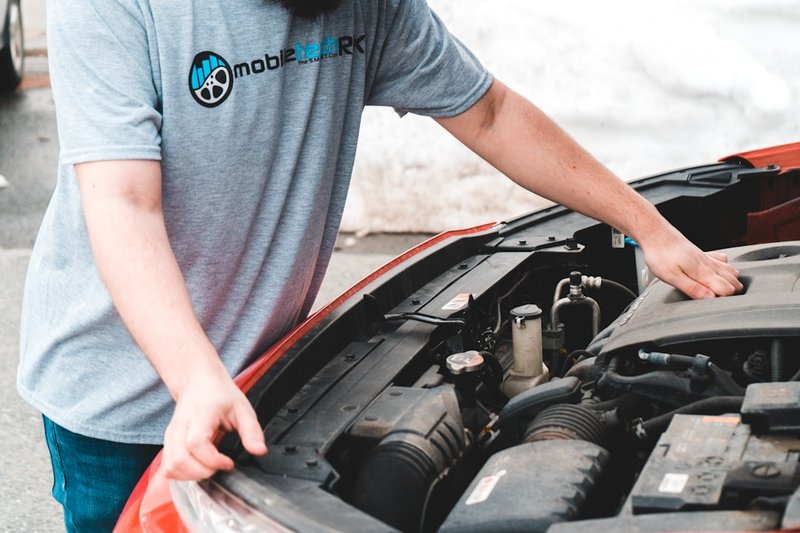
Never buy a car without a lift inspection. That's an axiom. If the seller says "I don't have time to go to a garage" — either they're hiding something, or the car isn't worth your time.
What is checked during a diagnostic inspection:
- Suspension: shock absorbers, ball joints, tie rods, bearings — everything can be felt on a lift in 15 minutes
- Underside of the body: rotten sills, longeron corrosion, welding marks from accident repairs
- Engine and gearbox: oil and coolant leaks; fluid level checks; condition of drive belts
- Computer diagnostics (OBD2): read error codes, including "hidden" ones that were cleared before the sale — they remain in the freeze frame
A standard full diagnostic in Kyiv or Kharkiv costs 500–1,200 UAH depending on the garage. Some shops charge less — ask in advance and agree on a specific list of services, not just "well, we'll see."
A test drive is not just "took it for a spin and it was fine"
Drive on your own. If the seller insists on sitting beside you and commenting on every maneuver — that's a suspicious sign. During the test drive, listen for:
- Knocking sounds when going over potholes and speed bumps — the suspension speaks loudly when it has something to say
- How the car behaves when braking from 60–80 km/h — does it pull to one side, does the steering wheel vibrate?
- Gearbox operation across all gears, including reverse
- Air conditioning, electric windows, seat heating — switch everything on separately
If the car has just been washed and the interior smells strongly of air freshener — sniff under the floor mat. Moisture and mold hide nowhere better than there. A car that has been in water is a lottery with a negative expected value.
Where to find a garage for inspection
The best approach: find a car on avtoprod.ua, arrange a meeting, and tell the seller right away — we're going for a diagnostic check. Choose the garage yourself, not the one the seller suggests. Official dealership service centers for the brand work well (if you know the make), or independent garages with good Google reviews in your specific city. In Lviv, Odesa, Dnipro — there are dozens of decent workshops with lifts and computer diagnostics.
If the seller refuses any kind of inspection — that's not a person who's in a hurry. That's a person who knows what will be found.
This article contains affiliate links. We may earn a commission — it does not affect the price you pay.