What to check before buying a used car: diagnostics, VIN and documents
Buying a used car — be ready for the fact that the seller knows more about it than you do. Here's how to level the playing field: where to check, what to look at, and which numbers hide the truth
:format(webp)/https://cms.avtodata.net/media/images/d76d90b0741447d8bcbb2e0adb60ef75.width-800.jpg)
Published 01.06.2026, avtoprod.ua
The used car market in Ukraine in 2026 is hundreds of thousands of listings, Euro-plate cars in the process of customs clearance, imports from abroad, and sellers who can spin a tale better than any screenwriter. The average price of a reasonably decent sedan in Kyiv or Kharkiv starts at $7,000–9,000 — that's real money, and losing it over an unchecked purchase stings twice as much.
So — no "I'll buy it and see." Before paying, you need to go through three stages: checking documents and legal status, a VIN deep-dive, and finally — a physical inspection. Each one can stop the deal. And that's a good thing.
Documents: boring, but critical
Start with the paperwork, even before you've looked at the car itself. Ask for a photo of the vehicle registration and verify the details: does the year of manufacture, engine displacement, and body color match what's stated in the listing. A minor discrepancy — for example "navy" instead of "blue" — isn't yet a reason to panic, but "1.6" instead of "2.0" is already a question worth asking.
Next — checking for encumbrances. As of 2026, this is done through the movable property encumbrance register and the Ministry of Justice service. The car must not be under a loan, arrest, or pledge. If the seller says "everything's clean, don't worry" — that's exactly when you should worry the most.
A separate point — the number of previous owners. One owner over 8 years = normal. Five owners over three years = a red flag. The car has either been in accidents, or resellers have laundered something not immediately obvious.
VIN: 17 characters that tell you everything
The VIN code is the vehicle identification number, and it appears in several places simultaneously: on the car itself (usually on the left side of the dashboard, on the door jamb plate, and on the body under the hood), in the vehicle registration document, and in databases.
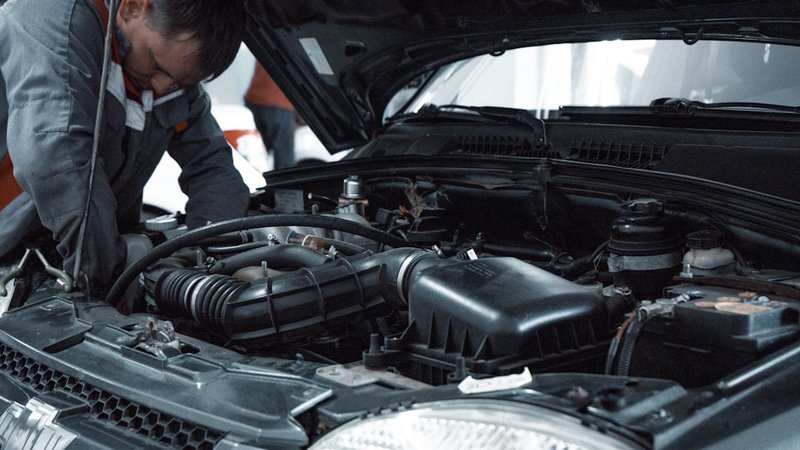
First of all — compare the physical VIN with the one in the documents. If they don't match, turn around and don't come back. Then — run it through the databases:
- CARFAX or AutoCheck — for cars that came from the USA or Canada. Will show accidents, mileage by year, insurance write-offs.
- CHECK.AUTO (Ukraine) or similar domestic services — MIA registration, customs history, theft records.
- Traffic police/police databases — stolen vehicle check through the official MIA of Ukraine portal.
If the car was imported from Europe — separately check the customs declaration: where and when it was cleared through customs, whether all duties have been paid. Since 2025, "grey" customs clearance is less common, but it still occurs — especially in the regions.
And one more thing: for cars from the US market, a CARFAX check may show a "clean" history, but the car may have hidden flood damage — flooding after a hurricane. Such a car is sold cheaply, looks decent, and after a year starts falling apart from the inside. Signs: mold smell in the interior, corrosion under the floor mats, rust in the spare tire compartment.
Diagnostics: who to trust and where to go
This is the most important stage — and the one most often skipped. "I know cars myself" or "the seller says it had a service recently" — these are not arguments.
One rule: diagnostics at an independent service center chosen by the buyer, not the seller. If the seller suggests a specific shop — refuse immediately. There may be arrangements in place. In Kyiv, Odesa, Dnipro, and Lviv there are dozens of service centers with computer diagnostics and lifts — choose one where there is no conflict of interest.
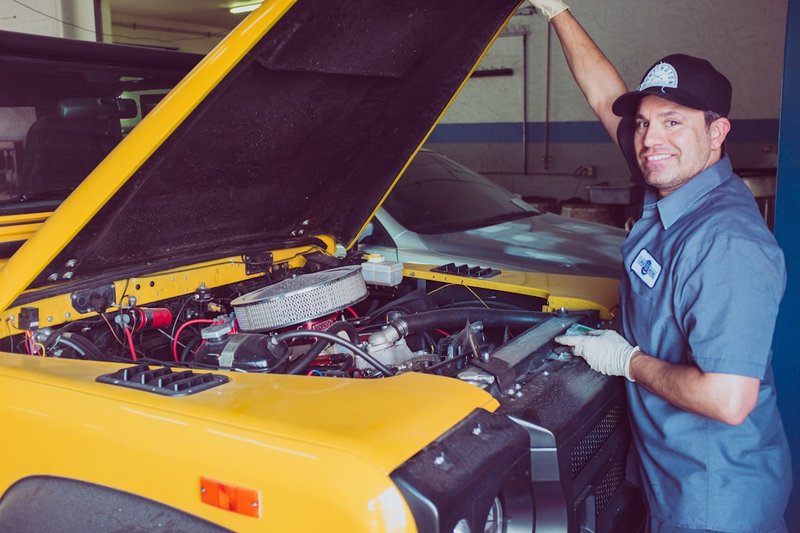
What should be included in a proper pre-purchase inspection:
- Computer diagnostics — reading fault codes from all modules: engine, transmission, ABS, airbag, suspension. Pay special attention to whether errors have been intentionally cleared before the sale (this is visible by the "mileage" since the last reset).
- Lift inspection — everything is visible from underneath: corrosion, weld marks from accident repairs, condition of body elements, subframe, and exhaust system.
- Paint thickness gauge check — factory paint norm is 80–120 µm. Readings below that (30–50) = a repainted panel after repair. Readings above (250+) = body filler, meaning a serious accident.
- Fluid and consumables check — condition of oil, coolant, brake fluid. Black oil with metal shavings means the engine is "worn out".
- Test drive — not in a parking lot, but a real drive: acceleration, braking, cornering. Vibrations, jerks, suspicious noises — you only feel all of this while moving.
The cost of such a diagnostic as of 01.06.2026 is from 500 to 1,500 UAH depending on the service center and car make. That's a pittance compared to what you might miss without it.
Where exactly to do all of this — briefly
If the car is in another city: ask the seller to provide an undercarriage inspection video, or arrange to have it driven to you on the condition of return if something is wrong (sellers rarely agree, but it's worth trying). An alternative is to hire a local dealer or auto inspector for 1,000–2,000 UAH. In Ukraine this is already a service available in all regional centers.
If the car is nearby — never have the inspection done at the seller's location. "There's a garage here, the neighbor is a mechanic" — no.
And finally — if after all the checks something seems suspicious, but the seller is pushing with "three other people are looking at it, decide by tonight" — that's manipulation. A normal seller with a normal car will wait calmly.